

ADE 2026: Thirty Years, Two Storms, One Secret Warehouse
Storm Austen soaked Amsterdam on Friday and Storm Boelo rolled in behind it on Saturday. Neither emptied a single room we walked into. Guestlist's team on the ground at the 30th Amsterdam Dance Event.

A birthday party in a gale
The first Amsterdam Dance Event in 1996 drew 300 delegates to three clubs. Thirty years on, it closed on Sunday 25 October with nearly 4,000 performing artists across more than 300 venues, from the Gashouder and Shelter to the ARTIS aquarium and the Centrale Markthal. The 2027 dates are already set: 20 to 24 October.
The weather did not get the memo. Storm Austen arrived on Friday under a code yellow warning, with gusts of 75–90 km/h and up to half a month's rain in a day across the middle of the country. Saturday gave us a dry, almost sunny afternoon. Then Storm Boelo, the first named storm of the season, came in behind it and blew through the night, peaking at 115 km/h on the coast and grounding at least 90 flights at Schiphol on Sunday.
And still the queues formed, the ferries to Noord filled up and the rooms stayed full. You learn something about a city's club culture when the trams are fighting a headwind and nobody turns back. Our guide promised "no stadiums, no pyro": while 40,000 people packed the Johan Cruijff ArenA, we were in a warehouse with no signage. Here is what that looked and sounded like.
Saturday, 08:00: Magda under the palms
Klaproos means "poppy". It opened in Amsterdam-Noord in 2018 as a sprawling wood-fired pizzeria and turns into a DJ bar at weekends. For the second ADE running it became SlapFunk and Yoyaku's day room. The Utrecht crew that started out throwing illegal raves and the Paris label-and-record-shop network had celebrated Yoyaku's tenth birthday here in 2025. This time the bill had Magda b2b Mari.te at the top, with Nathalie Seres and moopie, from eight in the morning until ten at night.
We crossed the IJ with the tail of Storm Austen still in the air. Inside, the room was lit a deep purple, with soft pink seating and round tables. Potted palms stood on a ledge in front of shelves of rack gear, and a warm orange glow came through from the next room, where arms were already going up. It is the least clubby club you will find at ADE, and that is the point. You can sit down with a can and a bottle of water, and you will be on your feet within the bar.
The groove sat at a patient 128 BPM: warm, sub-heavy and built around a riff that kept turning over. Then everything cut for a single bar, one bar of held breath, before it slammed back in with a new arpeggio on top. It is the oldest trick in minimal and it still works at breakfast. Magda knows a thing or two about that. She came up through Richie Hawtin's M_nus, now runs Items & Things, and played three ADE parties in four days. Mari.te once worked behind the scenes at ReSolute in New York, and that link was where our Saturday was heading next.
Saturday, 17:00: Can You Jigit?
This was our pick of the week, and it earned it. Can You Jigit? is the party of Jigit, the New York collective and label run by O.BEE, Tomas Station and Asli Tunaman, which travels under the banner of ReSolute, the long-running NYC underground institution. Its Detroit edition in 2024 ran dawn to dusk with Theo Parrish, Kyle Hall and, yes, Magda. In May it went for roughly 39 hours in Queens. For ADE 2026 it teamed up with VBX, the Amsterdam crew behind a week of after-hours, and put seventeen names on a bill in a warehouse whose address was never published. Doors at 17:00, close at 10:00 the next morning.
Our timing was precise. Boelo's rain arrived late on Saturday afternoon, right as the doors opened. Inside, it might as well have been July. The room was vast and low, with silver ventilation ducts and steel truss running overhead between thick pillars, and a single green exit sign glowing through the haze. Red laser fans swept from the booth end, with purple and blue washes over everything else. Shot from the back, it just keeps going: heads as far as the camera can see, and almost no phones in the air. People wore T-shirts and caps with crossbody bags. Nobody had bothered keeping their coat on.
The booth was not raised. Bobby., the Pleasure Club founder and Needs label boss, played from a long, low, black-draped table at crowd height, switching between two turntables and a CDJ, with the front row close enough to read his records. His set held a locked 130 BPM and was built on patience. He would pull the bass out completely and let a filtered breakdown hang for fifteen seconds, with a whistle-like sweep rising out of the haze, then drop the kick and sub back in. The whole floor went up with it. Later, from the middle of the room, he did it again as a bass-swap mix, with the low end sliding back in a few seconds after the new record came in. That kind of DJing only works when the room trusts you, and this room did.
Later in the same hall, Remi Mazet's live set kept things rolling at 129 BPM: four-to-the-floor, a syncopated bassline, teal light on white columns and a red-lit doorway at the back. It never broke down once and nobody wanted it to. With residents Tomas Station and O.BEE alongside Stella Zekri, Mayell (who also played VBX's sold-out daytimer at BRET) and Jonny Rock (back from Jigit Detroit), the night had the feel of a family reunion that happened to have a 4am crowd.
The red room
The moment we will be talking about all winter happened off the main floor. In a smaller side space lit entirely in deep red, Rouge Mécanique stood at floor level behind a table of pads with tiny screens, LED-lit pedals and a nest of patch cables, with a microphone on a stand and a pale Strat-style guitar on a patterned strap.
After hours of 130 BPM, the tempo dropped to exactly 100, held by a machine clock that never drifted. A drone sat underneath and the guitar lines bent and smeared over it. At one point the kick fell away entirely and left only the drone and the strings. The front row was leaning in close enough to touch the pedals and dancing at the table's edge. It was a reset, a palate cleanser and a statement of intent all at once: this party does not believe a warehouse night has to be one tempo from start to finish.
Rouge Mécanique is Romain Azzaro, who co-founded the African Acid Is the Future parties in Berlin and runs his own label, Rouge Mécanique Musique. He debuted on Rekids' Pyramids of Mars imprint with Witches in 2013, and his records mix Italo, motorik disco and psychedelia into a sound his RA bio frames as early-morning blues. He always carries a guitar. In a warehouse built for 130 BPM, those blues were exactly what the night needed.
The hour that came back
At 03:00 on Sunday the clocks went back to 02:00. Outside, Boelo was building towards gusts that would reach 115 km/h at IJmuiden. Inside, a seventeen-hour party quietly became an eighteen-hour one, and nobody complained.
When we finally walked out into Sunday morning, the wind had the last word. Trees were down across the country and flights were being cancelled at Schiphol. The people coming out of that warehouse looked as if they had been somewhere warmer.
Sunday into Monday: Giegling in the dark, SlapFunk to the finish
ADE officially ended on Sunday. The underground did not. We went back to Klaproos, where Giegling, the Weimar label and collective that has made mystery a house style, had taken over with TWOHAPPY from 11:00 on Sunday until 23:00 on Monday. The live acts included Map.ache, Leafar Legov, Thomas Melchior, Lawrence and Edward, alongside DJs Konstantin, Cassy and Yamour among others.
Edward, the Berlin-based Gilles Aiken who also records as Desert Sky, plays psychedelic, sample-based house with Krautrock in its blood. His live set came out of almost total darkness, so dark our camera recorded nothing but black. What it did catch was the sound: 123 BPM, the deepest and heaviest low end of our whole weekend, tonal bass motifs rolling under it, and the hi-hats filtered away for a long stretch before they flooded back in. It was the right way to hear Giegling. You did not need to see a thing.
For the truly committed there was SlapFunk's Monday Manifesto at BRET, our other pick in the guide: a 30-hour-plus marathon from 23:59 on Sunday until noon on Tuesday, with a line-up given only as "Trust the fam". It closed a week in which SlapFunk had already run The Other Side, two Blast Galaxy sessions, Dungeon Funk at Shelter, Klaproos and Levenslang. It is hard to think of a crew that did more for the underground side of this ADE.
Meanwhile, across the city
The 30th edition went big where it chose to. The opening night set the tone: the Dutch National Ballet and ISH Dance Collective sold out Swan Lake Remixed at the Gashouder, and Kybba played dancehall and bass with the Metropole Orkest at Melkweg. At the Centrale Markthal, Boris Acket's EINDER installation joined the Royal Concertgebouw Orchestra before sets from Elias Mazian and Djrum. Jean-Michel Jarre, ADE's Guest of Honour, talked AI and spatial sound at Felix Meritis and played an audiovisual show at AFAS Live.
On Saturday, AMF sold out the Johan Cruijff ArenA for 40,000 people. Amelie Lens played her last set before maternity leave. KI/KI sold out two marathon nights at the Ziggo Dome. The Gashouder came back after roughly 18 months of renovation. Its first real party, a Benwal and Armin van Buuren b2b, closed on "This Is What It Feels Like", though the venue's official reopening is not until 30 October. With the Gashouder not ready in time for its usual nights, Awakenings moved to the Sugarfactory in Halfweg for eight events. Speedy J's STOOR ran around eight hours of machines at Paradiso with Donato Dozzy, Wallis and The Fear Ratio.
The weather left its mark. Into the Woods at NDSM closed at 21:30 on Saturday, 90 minutes early, after organisers and the emergency services agreed it was no longer safe under canvas as Boelo's code yellow approached. Ponchos were handed out at the exit. That was the week's warning to every outdoor promoter who books Amsterdam in late October.
It was not all celebration. Pepper spray was used during thefts at Audio Obscura and elrow on Friday. On Saturday, tear gas sent 15 people to first aid at Franky Rizardo's Gashouder party after a necklace snatch. NL Times counted four such incidents in the week. Expect bag checks and "wear your chain inside your shirt" warnings to be standard next year.
The conference gave the week its substance. ADE and Insomniac announced the Map Point Summit, a new three-day gathering in Las Vegas in May 2027. ADE and VibeLab launched the first Nighttime Culture Index, built on more than 12,000 line-ups and 3,000 venues across six cities. Two of its findings should stay with anyone who books parties. Women and gender-diverse artists make up only 27–32% of line-ups. And in Amsterdam, just 28% of women said they feel safe travelling home at night, against 61% of men. ADE director Jan-Willem van de Ven put it plainly: "You can't have a nighttime industry without a nighttime culture." Before any of it started, the Bridges for Music riders cycled from London to Amsterdam through heavy rain. By the end of day one they had raised nearly £27,000 for students in Langa Township, Cape Town.
Verdict
Thirty years in, ADE runs on two scales at once. There is the stadium, sold out and spectacular. And there are the rooms with no signage, where a New York crew and an Amsterdam crew can put seventeen artists in an unnamed warehouse, let a guitarist slow the night to 100 BPM, and trust a crowd in T-shirts to stay for eighteen hours while a named storm batters the city. ADE's own Nighttime Culture Index found that culture at night is thriving even as the business around it is under pressure. Our weekend was the proof.
Two storms, a pizzeria at breakfast, a warehouse at sunset, Giegling in the dark. Bring a better jacket next year, and book the same parties.
Best of the week: Can You Jigit? (VBX x ReSolute x Jigit), secret warehouse, Saturday 24 October.

ADE 2026 The GUESTLIST Guide
ade

ADE Is 30 Years Old and I'm Still Pretending My Trainers Are Fashionable
ADE has grown enormously, but the beautiful chaos remains reassuringly familiar: impossible schedules, surprise sets, overcrowded WhatsApp groups, missed trams, unexpected reunions and the firm belief that you can attend six events at opposite ends of Amsterdam on the same night.
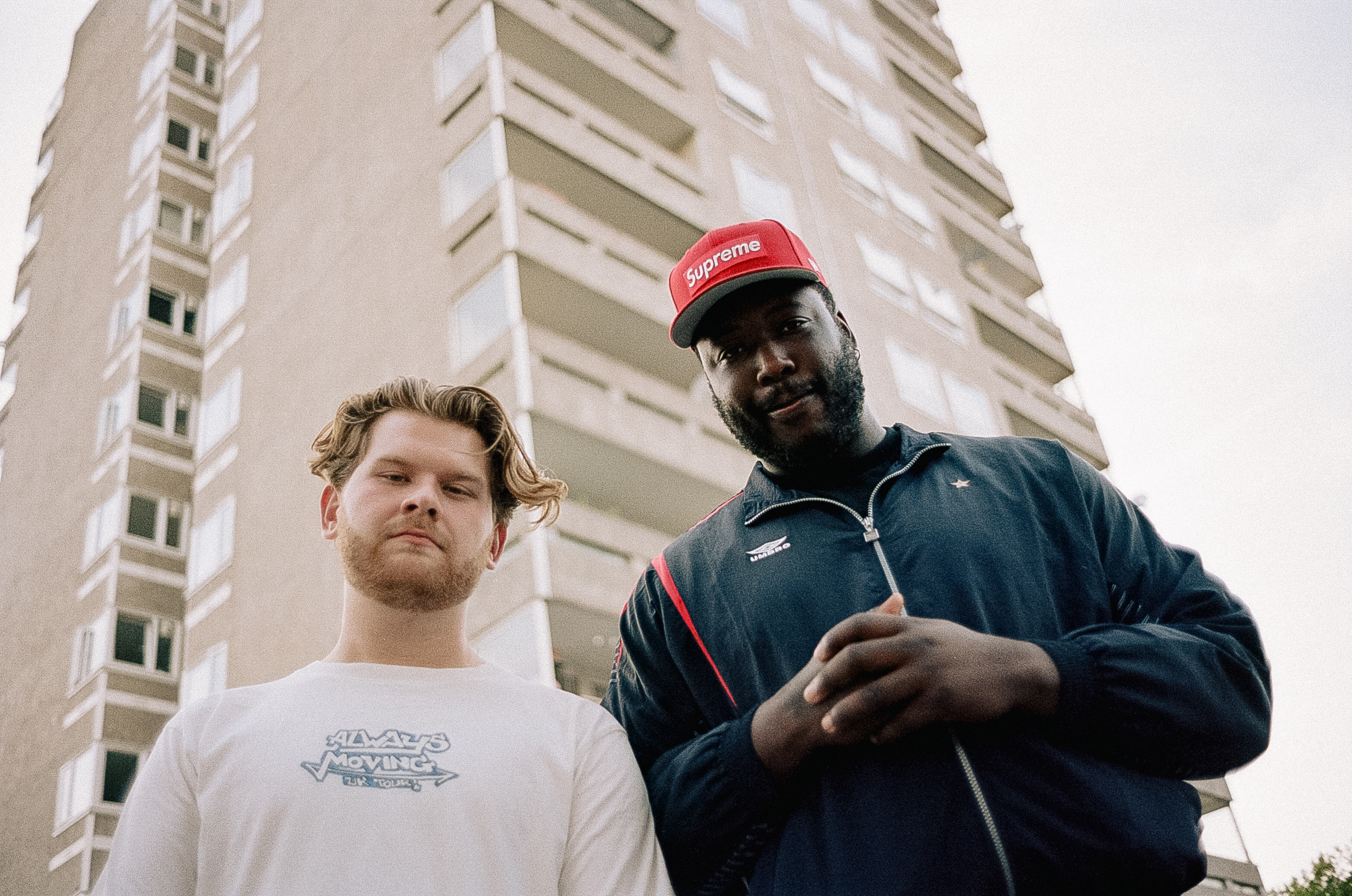
BEXBLU & PAUL STEPHAN RETURN WITH NEW SINGLE ‘U FEEL GOOD’
There’s a distinctly nostalgic quality running through ‘U Feel Good’, but rather than simply looking backwards, the pair reshape those influences into something unmistakably contemporary, showcasing the natural chemistry between BexBlu’s production and Stephan’s distinctive delivery.